The Devil Wears Prada 2 Review
A totally servicable sequel that glides instead of wows
The legacy sequel run Hollywood has been on for the past ten years has been pretty annoying, and The Devil Wears Prada 2 had every opportunity to be equally irksome. Luckily it isn’t, and while it rehashes elements of the original, the movie is an honest sequel—a storyline extending forward rather than a completely backward-looking lap around old material.
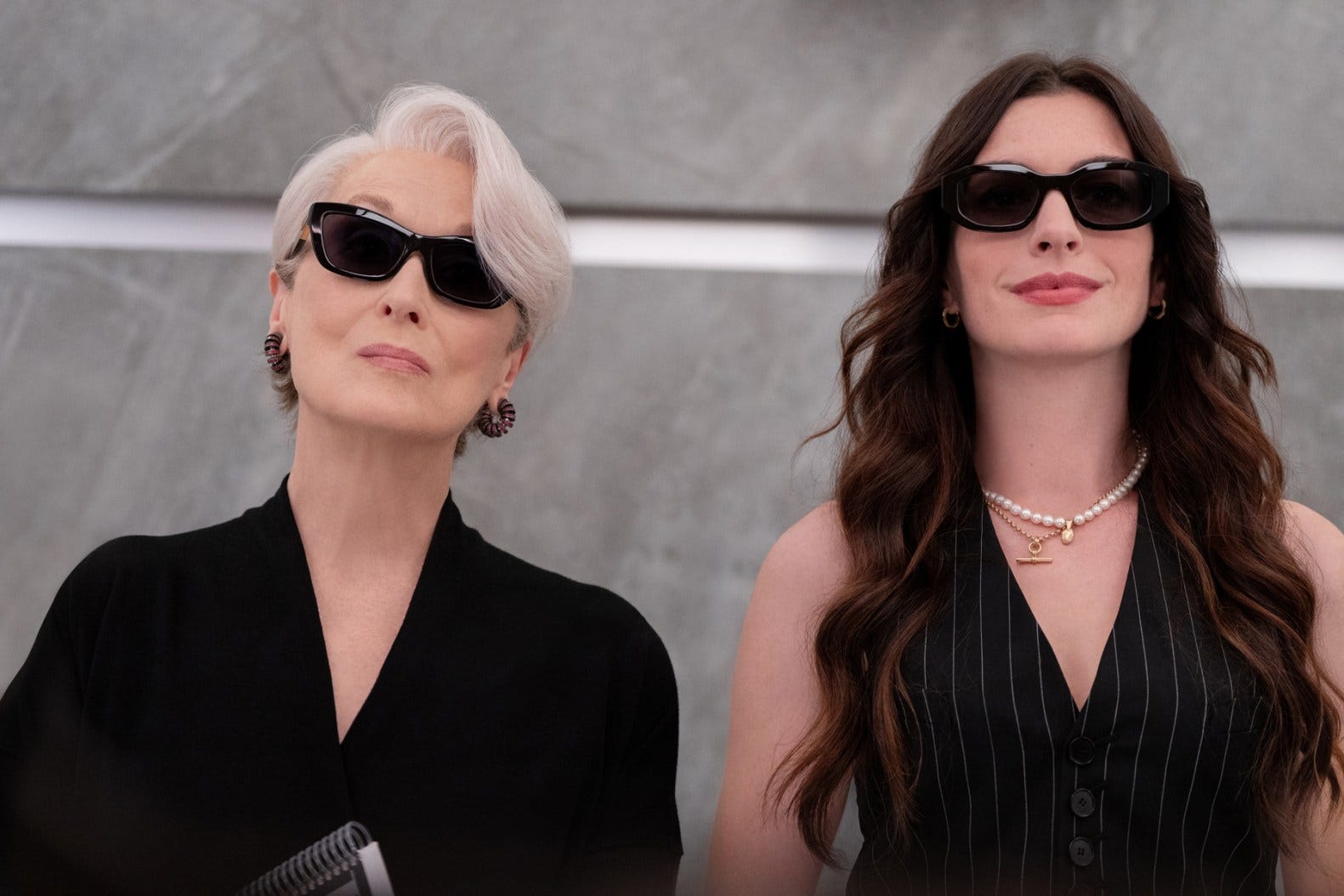
The main four—Streep, Hathaway, Blunt, and Tucci—slip back into their roles perfectly. The humor is light and buoyant. The celebrity cameos, which could easily have been grating, land instead as little delightful flourishes. Of course, the clothing is beautiful.
The movie has a meta-commentary about the death of journalism and the encroachment of AI on its mind, and the vehicle for it is Justin Theroux‘s goofy Jeff Bezos figure, who is mostly ham-fisted and jokey, never posing much jeopardy.
The movie just glides along rather frictionlessly. You can guess early on that Lucy Liu‘s MacKenzie Scott-like character—his ex—is poised to save the day with her money and benevolence. The expectability is fun, yet it makes the movie more disposable than memorable. It works to the pleasurable effectiveness of the film, but it limits its potency.
What’s frustrating is that, in two scenes, the movie shows what it could have been. The first is in the third act in Milan, by the Last Supper painting, where Theroux‘s Benji Barnes drops the goof and puts the fear of God into Streep‘s Miranda about what he’d do to her company if he took it over—revealing just how venal and anti-art this top class really is. There’s a sinister glint in Theroux‘s eye that makes it past the prosthetic to genuinely horrify Streep. The destructive techno-utopianism the movie had been gesturing at suddenly becomes shockingly lucid and fearsome.
The second is quieter: Hathaway‘s Andy reflects on groundswell changes in the media business with her (random and lame) new boyfriend (Patrick Brammall), who, as a contractor, reaches for a renovation metaphor—change is like an old building you fix up—a comparison that dismays her. Instead of being so relentlessly—and again, charmingly!—glib, the movie could have been strengthened by a few more of these reflections.
No one should walk into The Devil Wears Prada looking for advanced commentary. But in the moments where this new film got serious, it suggested a better version somewhere in the middle ground—a version that kept the breeziness yet had more pointed thematic and character stakes. I had a great time and would gladly take a third; I just wish it were willing to risk a little more weight—the actors and story could certainly bear it.